“We Already Have a System” — We Connect It, Not Replace It
If your accounting software, webshop or warehouse system is working well, there's no need to replace it. Connect it to AI — and its value grows.
This is one of the most common things we hear in an initial consultation: “We already have a system.” Accounting software, a webshop, a CRM, a warehouse management tool — in many businesses these have been running for years, and running well. This article is about why that is not an obstacle. Quite the opposite.
The misconception that holds businesses back
Many people picture an AI rollout as a wholesale system replacement. You tear down what you have built and bring in something new and unfamiliar. That picture is wrong — and we understand why it puts people off.
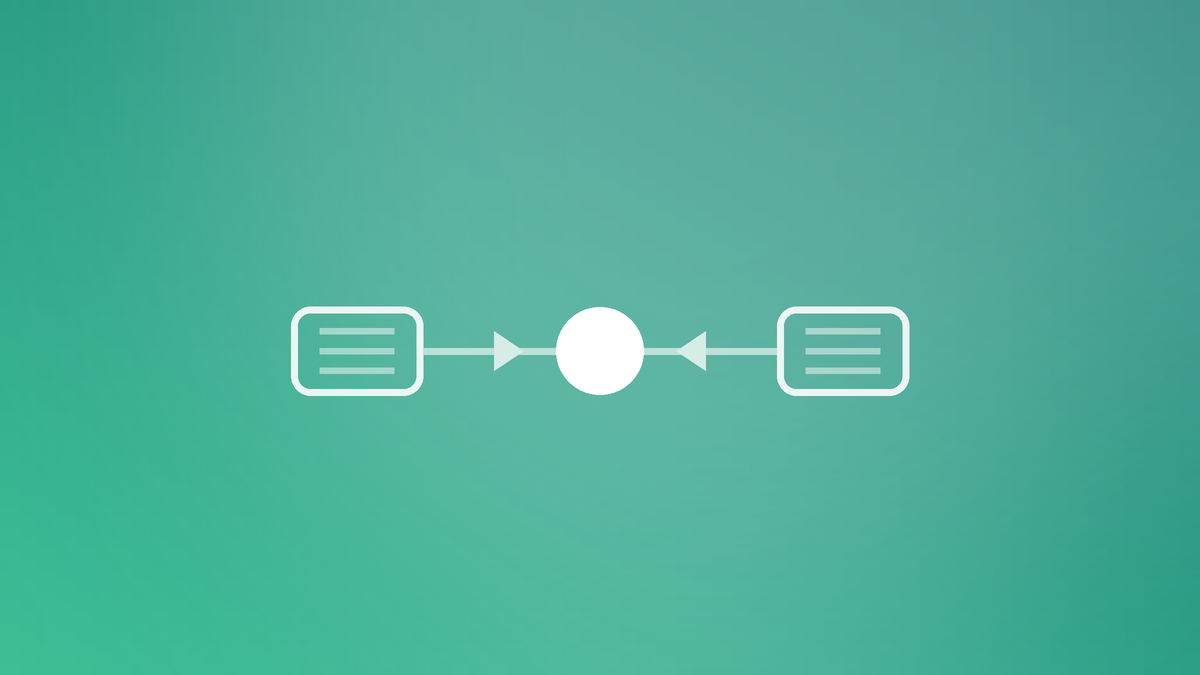
The reality is different. Integrating AI with existing systems does not mean replacement; it means building on top of what is already there. The AI layer connects to what you are already using and draws its data, context and knowledge from there.
There is no need to retrain your team. No need to lose years of accumulated data. No need to learn an entirely new process from scratch.
How this works in practice
Take a concrete example. A trading company runs its order management in a bespoke system, uses a separate accounting package to handle invoices, and keeps stock levels in yet another well-established application. Three systems, three different sources — but all three store machine-readable data.
Once these are connected to the AI layer, the assistant can see stock levels, order history and invoicing status simultaneously. When a customer asks when their order will arrive, or when a payment deadline falls due, there is no need to search across three separate places. The answer is simply there.
This is not magic. It is data integration — built with care.
At IFCLab this has been a core development principle from the outset, not an afterthought. The ECON connector, for instance, was built precisely for this purpose: to bring existing business data sources within the scope of the AI system.
Why connected systems make the AI smarter
An AI system is only as good as what it knows. If you run a generic chatbot with no business context, the answers will be equally generic.
If the system has access to your own product catalogue, your contractual terms, your order history or your customer relationship data, the quality of its responses — to customers and to your internal team alike — is in a different class entirely.
Across the businesses we work with, we consistently see that each additional connected system produces a noticeable improvement in accuracy. Not because the AI has become more intelligent, but because it has access to more relevant context.
This is also why we recommend thinking about the full ecosystem: the more sources the system draws from, the less your colleagues need to hold details in their heads or manually reconcile data from different places.
Where these projects tend to get stuck
Not every integration is equally straightforward. It is worth being clear-eyed about where difficulties typically arise.
Closed or legacy systems. If the accounting software or warehouse application offers no API and does not allow data export in a machine-readable format, the integration either requires a workaround or simply cannot be done directly. This is not our limitation — it is the system's limitation.
Disorganised data structures. You can only connect data that is interpretable. If the data is inconsistent, incomplete or scattered, you need to bring order to it before the AI layer can work with it. That represents additional work — but it is work that should be done regardless.
Too many systems at once. Individual integrations are not complicated, but trying to connect ten different sources simultaneously makes prioritisation essential. Which system delivers the most value once it is in the picture? Start there.
Internal access permissions. In corporate environments, IT departments or external developers often cannot grant API access immediately. This can cause administrative delays — not a technical barrier, but one that takes time to resolve.
What you gain with one module — and what you gain with the full picture
You can start with a single integration and see results straight away. But it is important to understand: with just one source connected, the AI only sees what that source provides. If you connect the webshop but not the CRM, the system will have no knowledge of a customer's history when handling communications with them.
That is perfectly fine — if it is a conscious choice. But when the system has the full picture, all modules draw from the same pool of knowledge and their accuracy reinforces one another.
We are not saying everything must be done at once. We are saying: know what you gain from the full picture, then decide where you want to start right now.
In brief, if you take one thing away
- Existing systems do not need to be replaced — they can be connected.
- The more sources the AI draws from, the more accurate and useful it becomes.
- The prerequisite for integration is that the system can export machine-readable data — this is the first thing worth establishing.
- If a system is closed, that is not necessarily a blocker: workarounds exist, but they require time and a deliberate decision.
- Starting with a single integration is worthwhile — just be clear about what you are setting aside for now.
In a consultation, this is precisely what we examine together: what can be connected, what cannot, and which sequence will deliver the most value with the least friction.
Shall we look at your company?
A short online conversation that can reveal where AI is worth deploying in your business.
Book a free consultationMore articles
The Transition Roadmap: Turning an Existing Business into AI-First
Most companies weren't born AI-native. That's not a problem, as long as you know the right order to move in and what to leave alone at the start.

AI News: EU Enforcement, Agent Boom and New Features (Oct 2026)
EU AI oversight moved into enforcement mode, agent-based tools accelerated, major platforms rewrote their billing. Two weeks of AI news from an SME perspective.

Partner Portal: When Resellers Stop Ordering by Email
If B2B orders still arrive by email, someone is always copying, re-entering and checking them. Here is what a self-service partner portal looks like in practice.